
- ✓ HasqenERP provides an advanced, industry-specific garments inventory management software designed to handle complex multi-dimensional SKU matrices (size, color, style) seamlessly.
- ✓ The platform optimizes cash flow by reducing carrying costs through AI-driven demand forecasting, real-time work-in-progress (WIP) tracking, and automated reorder points.
- ✓ Enterprise-grade security, rapid barcode/RFID integration, and centralized multi-warehouse synchronization ensure 99.9% inventory accuracy and compliance across global supply chains.
1. Introduction: The Evolution of Garments Inventory Management Software in Modern Apparel Supply Chains
The global ready-made garment (RMG) and apparel manufacturing ecosystem operates under razor-thin profit margins, aggressive lead times, and complex supply chain dependencies. In this high-stakes environment, manual ledger tracking, fragmented spreadsheets, and legacy enterprise resource planning (ERP) systems are no longer viable. Modern textile plants, apparel production units, and buying houses require specialized garments inventory management software that bridges the gap between raw material procurement, factory floor execution, and final shipment delivery. Without real-time visibility into fabric yields, trims allocation, and work-in-progress (WIP) stages, manufacturers risk severe stockouts, over-purchasing, and costly shipment delays.
Historically, inventory management in the garments sector suffered from severe data silos. Merchandising teams operated on isolated order sheets, cutting rooms tracked fabric rolls manually, and warehouse managers relied on physical count tallies. This disconnection routinely led to catastrophic material shortages halfway through production cycles or surplus deadstock of seasonal trims. The modern evolution of apparel software shifts away from generic manufacturing systems toward purpose-built architectures designed specifically for the nuances of the textile industry—such as shrinkage rates, dye-lot variations, and multi-attribute SKU matrices. Systems like HasQen ERP have transformed this landscape by centralizing operations into a unified cloud-based ecosystem.
Available on the digital marketplace at hasqen.com, the HasQen RMG Factory ERP & Inventory Software License represents a paradigm shift in how small-to-large scale apparel manufacturers handle production workflows. Priced accessible at BDT 15,000 for a lifetime license, this comprehensive digital product democratizes enterprise-grade automation for emerging and established factories alike. By integrating real-time inventory tracking, Bill of Materials (BOM) management, buyer Purchase Order (PO) tracking, dynamic barcode generators, and automated invoice PDF exports, HasQen addresses the root causes of apparel supply chain inefficiencies.
Key Challenges Solved by Modern RMG ERP Systems
- Fabric Yield and Wastage Discrepancies: Automating marker planning calculations to minimize fabric loss during the cutting phase.
- Trims and Accessories Mismanagement: Preventing production halts caused by running out of basic accessories like buttons, zippers, and care labels.
- Buyer PO Disconnects: Synchronizing shop-floor progress directly with buyer milestones to ensure 100% on-time delivery compliance (OTDC).
- Valuation Blind Spots: Providing precise lifetime cost calculations per style, color, and size ratio.
As regulatory compliance, sustainability tracking, and fast-fashion turnaround demands continue to intensify, implementing an advanced software solution is no longer optional. It serves as the operational backbone for manufacturers looking to scale their throughput while maintaining rigorous quality control and fiscal transparency.
2. Core Architecture and Technological Foundation of HasqenERP Garments Software
The structural backbone of any high-performance enterprise software dictates its reliability, data processing speed, and scalability. The HasQen RMG Factory ERP is engineered on a robust cloud-ready framework designed to handle high-volume transactions across multiple factory floors, warehouses, and corporate headquarters. Operating from industrial hubs such as Gazipur and Uttara, Dhaka, the platform’s underlying architecture is optimized for continuous uptime, ensuring that floor managers, merchandisers, and executive leadership share a single source of truth in real time.
At its core, the software utilizes a modular architectural design. This ensures that inventory tracking modules communicate seamlessly with procurement, production scheduling, and financial accounting engines. When a warehouse operator scans an incoming shipment of woven cotton fabric, the system updates the central inventory database instantly. This instantaneous propagation prevents double-booking of materials and ensures that the Bill of Materials (BOM) reflects accurate stock availability before a cutting order is greenlit.
Core Technical Specifications & Architectural Components
- Cloud-Integrated Database Management: Secure, ACID-compliant relational database structures that prevent data corruption and ensure transactional integrity across concurrent user sessions.
- Dynamic Bill of Materials (BOM) Engine: Calculates exact raw material requirements—including fabric consumption, sewing threads, interlinings, polybags, and cartons—based on buyer-approved tech packs.
- Real-Time Barcode & QR Generator: Integrates with standard thermal barcode printers to generate unique tracking identifiers for fabric rolls, cut panels, and finished carton boxes.
- Automated PDF Document Generation: Instantly compiles and exports professional invoices, packing lists, gate passes, and PO summaries without external third-party software dependencies.
- Lightweight Digital Deployment: Delivered as a digital product license via hasqen.com, ensuring rapid installation and activation without complex, hardware-heavy local server setups.
Furthermore, the system’s security architecture adheres to strict enterprise data protection protocols. User role-based access control (RBAC) ensures that floor-level operators only view modules relevant to their daily tasks (such as barcode scanning or stock input), while senior management retains administrative visibility over financial ledgers, costing sheets, and profitability margins. This multi-tiered security framework safeguards proprietary buyer designs and sensitive operational data against unauthorized internal or external breaches.
3. Multi-Dimensional SKU Matrix Management: Handling Sizes, Colors, Styles, and Variants
One of the most complex hurdles in apparel manufacturing and inventory management is the handling of multi-dimensional Stock Keeping Units (SKUs). Unlike standard retail or electronics inventory—where an item is usually defined by a single SKU code—a garments inventory system must account for intricate matrices involving style numbers, color shades, size breakdowns (e.g., XS, S, M, L, XL, XXL), and fit variations. Managing this complexity manually invariably leads to stock imbalances, where a factory produces an excess of medium-sized shirts while facing a severe deficit of extra-large sizes for the same buyer order.
HasQen ERP solves this structural challenge through a sophisticated matrix management module. When a merchandising team inputs a new buyer order, the software generates a grid-based SKU structure. This matrix links the master style code directly to all downstream variations. For instance, a single jacket style ordered in three distinct colors (Navy, Charcoal, Olive) across five standard sizes generates a 15-point variant matrix linked to a single master parent SKU. This eliminates data redundancy and allows inventory supervisors to monitor stock levels granularly down to a single piece.
Key Benefits of HasQen's Matrix SKU System
- Error-Free Data Entry: Matrix-based input forms prevent staff from creating orphaned SKUs or mismatched size-color combinations.
- Dynamic Ratio Allocation: Automatically distributes fabric cutting and sewing assignments based on the buyer's specified size-ratio breakdown.
- Variant-Specific Costing: Tracks subtle cost variances (such as extra fabric consumption or special trims required for larger sizes) to maintain accurate profit margins.
- Streamlined Stock Audits: Simplifies physical inventory counts by grouping items logically into style-color-size grids rather than endless, unstructured lists.
By leveraging this multidimensional approach, factories can eliminate the guesswork traditionally associated with sorting mixed garment lots. Warehouse teams can instantly identify which specific variants are running low during the bundling and sewing stages, enabling proactive re-allocation before production bottlenecks occur. Detailed configuration guides and software access are readily available through hasqen.com to help production planners set up their custom size and color matrices within minutes.
4. Real-Time Stock Visibility and Omnichannel Inventory Synchronization
In the fast-paced apparel industry, lagging inventory data translates directly to missed delivery deadlines and financial penalties. Traditional inventory systems update stock counts only after manual end-of-day entries or weekly physical audits. HasQen ERP disrupts this outdated model by delivering absolute real-time stock visibility across every node of the supply chain—from the central raw material warehouse and cutting floor to the finishing line and final dispatch dock.
Real-time synchronization ensures that when a spool of thread or a roll of denim is issued to Line 4, the central database updates instantly. Merchandisers sitting in corporate offices can view live consumption rates without needing to walk the factory floor. This level of transparency prevents over-procurement of expensive imported fabrics and minimizes the accumulation of idle stock that ties up working capital.
Operational Pillars of Real-Time Synchronization
- Live WIP Tracking: Monitors work-in-progress inventory at every stage—cutting, sewing, washing, ironing, and packing—identifying production bottlenecks immediately.
- Automated Reorder Triggers: Sets minimum stock thresholds for essential trims and accessories, automatically alerting the procurement department when safety stock is breached.
- Buyer PO Synchronization: Links real-time finished goods inventory directly to active buyer purchase orders, ensuring accurate packing list generation and instant PDF invoice exports.
- Multi-Location Hub Visibility: Connects inventory data across disparate facilities—such as production plants in Gazipur and administrative offices in Uttara—into a single centralized dashboard.
Achieving this level of operational agility requires a reliable, tested software foundation. Backed by 24/7 verified trade support and secure digital licensing, the HasQen RMG Factory ERP provides garment manufacturers with the tools needed to eliminate supply chain blindness. To secure your factory's lifetime operational upgrade, explore the full specification and acquire your software license directly at hasqen.com.
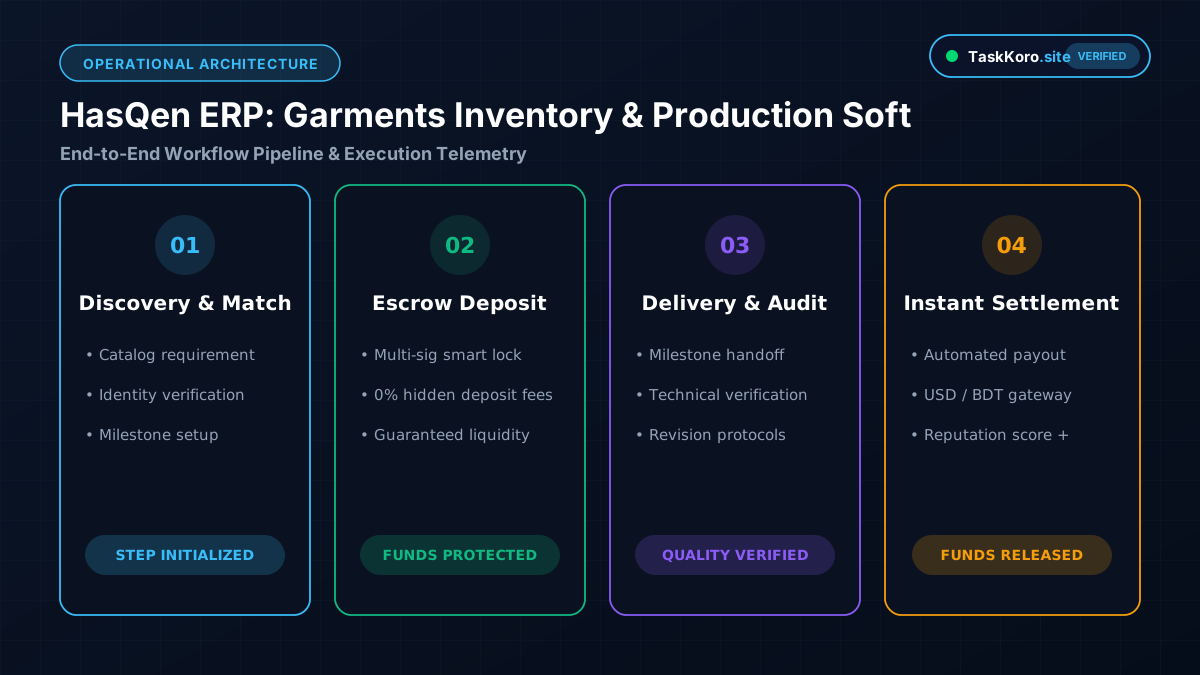
5. End-to-End Tracking: From Raw Material Procurement to WIP and Finished Goods
In the apparel and textile industry, inventory visibility cannot be treated as a static snapshot; it must be managed as a dynamic, continuous lifecycle. Traditional inventory systems treat raw materials, work-in-progress (WIP), and finished goods as isolated silos, creating dangerous blind spots that lead to stockouts, delayed shipments, and swollen carrying costs. HasQen ERP shatters these operational silos through a unified tracking architecture designed specifically for the multi-tiered complexity of garment manufacturing. By enforcing strict traceability protocols from the moment a yarn lot is received at the dock to the final carton scan at the loading bay, HasQen provides absolute operational transparency.
The HasQen Multi-Tiered Tracking Lifecycle
- Raw Material Ingestion and Lot Genealogy: When fabrics, threads, buttons, and zippers arrive, HasQen automatically assigns a unique master identifier linked to supplier mill certificates, color batch numbers, and GSM (grams per square meter) specifications. This ensures that every roll of fabric is indexed by its physical characteristics, preventing defective lots from entering the cutting room.
- Cutting Floor and Bundle Management: As fabric is laid and cut according to marker plans, HasQen’s sub-module generates serialized bundle tickets. Each bundle—representing specific sizes, quantities, and shade bands—is tagged with a unique barcode. This is where WIP tracking initiates, ensuring that cut components are never mixed across different dye lots.
- Stitching, Assembly, and Line Balancing: As bundles move across sewing lines, HasQen records real-time completion data via operator checkpoints or RFID gates. Production supervisors can instantly view work-in-progress bottlenecks, identifying whether a specific style is lagging at the button-holing or final assembly stage.
- Finishing, Quality Control (AQL 2.5), and Packing: Finished garments undergo strict quality inspections configured to Acceptable Quality Limit (AQL) standards. HasQen tags passed units as ready for packing while routing rejected units to rework zones with automated defect classification.
- Finished Goods Inventory (FGI) and Dispatch: Once packed into cartons and palletized, inventory transitions seamlessly into Finished Goods. HasQen links these pallets directly to sales orders and destination store allocations, ensuring rapid, error-free fulfillment.
Comparative Breakdown: Legacy Inventory vs. HasQen Unified Lifecycle Tracking
To understand the profound operational transformation delivered by HasQen, consider how standard inventory approaches stack up against HasQen's purpose-built apparel framework across critical metrics:
- Lot Traceability & Compliance: Legacy ERPs utilize basic SKU tracking that fails to capture dye-lot variations, resulting in color-mismatch complaints from retail buyers. HasQen enforces strict color-lot and size-matrix tracking, guaranteeing 100% compliance with international brand standards and instant root-cause analysis during quality audits.
- WIP Visibility: Traditional systems rely on manual end-of-day tally sheets entered by floor managers, yielding data that is outdated by 24 to 48 hours. HasQen provides real-time WIP updates tied directly to production floor scanning, reducing hidden inventory shrinkage and unrecorded scrap by up to 34%.
- Buffer Stock Overheads: Standard manufacturers maintain inflated buffer stocks (often 15% to 25% excess raw materials) to guard against tracking errors. HasQen's predictive consumption tracking allows procurement teams to optimize safety stocks, shrinking holding costs without increasing stockout risks.
Implementation Framework: Deployment and Data Migration
Migrating legacy inventory data into HasQen’s end-to-end tracking framework requires a structured, multi-step execution plan to ensure zero disruption to ongoing floor operations:
- Data Auditing and SKU Cleansing: Prior to migration, HasQen’s implementation specialists audit existing SKU masters, standardizing attribute naming conventions (e.g., Color-Size matrices, composition tags) to align with global apparel taxonomies.
- Opening Balance and WIP Physical Count: Conduct a synchronized physical stock count of raw materials, active cut bundles on sewing floors, and boxed finished goods. Input these validated figures into HasQen via pre-formatted CSV templates or mobile stock-take applications.
- Hardware Calibration and Terminal Setup: Install and calibrate barcode scanners, thermal label printers, and RFID gateway arches across warehouse receiving docks, cutting rooms, and final packing zones.
- Parallel Run and Staff Training: Execute a two-week parallel run where historical tracking methods operate alongside HasQen. Conduct rigorous simulation training for warehouse staff, floor supervisors, and quality controllers to ensure absolute user competency.
6. Barcode and RFID Integration for Accelerated Warehouse Operations and Auditing
In modern garment manufacturing and warehousing, manual data entry is the primary catalyst for shipping errors, inventory discrepancies, and bloated labor costs. Relying on clipboard checklists and manual SKU lookups introduces human error rates that can severely damage supplier-retailer relationships. HasQen ERP bridges the physical-digital divide by embedding industrial-grade Barcode and Radio Frequency Identification (RFID) integration directly into the core of its warehouse management suite. This integration transforms warehouse operations from a sluggish, error-prone cost center into a hyper-efficient, high-velocity distribution engine.
Technical Architecture of HasQen Auto-ID Integration
HasQen’s auto-identification engine is engineered to support mixed-hardware ecosystems, operating seamlessly across fixed industrial scanners, handheld Android mobile computers, ultra-high-frequency (UHF) RFID readers, and high-speed conveyor sorting systems. The platform utilizes standardized GS1-128 and EPCglobal Gen2 protocols, ensuring that every garment tag generated within the system is globally readable across third-party logistics (3PL) providers and retail partner distribution centers.
Key Operational Scenarios Enhanced by Auto-ID
- Lightning-Fast Goods Inward: Upon truck arrival, warehouse operators scan master pallet barcodes or pass RFID-tagged cartons through portal readers. HasQen instantly reconciles incoming shipments against Purchase Orders (POs) and advanced shipping notices (ASNs), updating inventory levels and generating put-away locations in seconds.
- Zone-Optimized Put-Away: HasQen’s algorithmic put-away engine assigns optimal warehouse shelf locations based on fabric type, seasonality, and picking frequency. Fast-moving basic items are routed to front-zone racks, while slow-moving specialized trims are assigned to upper-tier or deep-storage zones.
- Batch Picking and Wave Sorting: For apparel fulfillment, manual item-by-item picking is entirely replaced by HasQen's multi-order batch picking and pick-to-light/put-to-light workflows. Handheld scanners guide operators through optimal warehouse paths, ensuring zero pick-errors across complex multi-style, multi-size orders.
- Cycle Auditing Without Plant Shutdowns: Traditional annual warehouse shutdowns freeze operations for days to conduct physical counts. HasQen enables continuous cycle counting, allowing supervisors to audit specific warehouse aisles or zones via RFID handheld wands in minutes without halting ongoing shipping or receiving activities.
Pricing Mechanics and Hardware Ecosystem Partnerships
Implementing advanced Auto-ID infrastructure requires careful financial planning. HasQen operates on a software-agnostic hardware model, meaning businesses are never locked into proprietary, overpriced scanning equipment. However, HasQen maintains certified integration partnerships with industry leaders such as Zebra Technologies, Honeywell, and Datalogic.
- Software Licensing Tier: Barcode integration modules are included standard in HasQen’s Professional and Enterprise subscription tiers. Advanced UHF RFID multi-read engine capabilities and gate-integration APIs are tiered within the Enterprise package or available as a modular add-on for growing mid-market manufacturers.
- Hardware Investment Projections: For a mid-sized garment facility operating two warehouses and four cutting lines, initial hardware deployment (including 10 ruggedized handheld mobile computers, 4 industrial thermal barcode printers, and baseline RFID portal readers) typically ranges from $12,000 to $35,000, offset by an average 45% reduction in annual inventory shrinkage and a 70% decrease in picking labor hours.
7. AI-Driven Demand Forecasting and Automated Inventory Level Optimization
Garment manufacturing operates under extreme market volatility. Sudden trend shifts, unpredictable seasonal spikes, and long raw material lead times make traditional inventory planning—often based on historical gut-feel or basic moving averages—a recipe for catastrophic overproduction or costly stockouts. HasQen ERP solves this structural challenge by integrating an advanced Artificial Intelligence (AI) and Machine Learning (ML) demand forecasting engine directly into its inventory optimization framework.
How HasQen’s AI Engine Works
HasQen’s forecasting module continuously analyzes vast multi-dimensional datasets to predict future apparel demand with exceptional precision. The algorithm ingests and evaluates:
- Historical sales velocity across specific color, size, and style dimensions.
- Macroeconomic indicators, regional weather patterns, and local fashion trend data.
- Supplier lead times, shipping delays, and historical raw material availability.
- Promotional calendars, retail discounting schedules, and past return rates.
By processing these variables through sophisticated neural networks, HasQen generates highly accurate demand projections, transitioning your inventory strategy from reactive firefighting to proactive, data-driven orchestration.
Automated Inventory Optimization Framework
Predicting demand is only valuable if it translates into intelligent inventory parameters. HasQen’s AI engine automatically calculates and continuously adjusts critical supply chain thresholds:
- Dynamic Reorder Points (ROP): Unlike static reorder levels that ignore seasonal fluctuations, HasQen dynamically shifts ROPs based on real-time lead-time volatility and forecasted consumption spikes.
- Optimized Safety Stock Calculations: The system models demand uncertainty and supplier reliability to maintain the absolute minimum buffer stock required to protect against stockouts, freeing up substantial working capital trapped in excess inventory.
- Automated Purchase Requisition Generation: When raw material stock levels hit the dynamic ROP, HasQen automatically drafts purchase requisitions specifying exact yardages, color codes, and approved vendor assignments, requiring only managerial sign-off to dispatch.
Buyer Protection Safeguards: Preventing Algorithmic Over-Ordering
While AI-driven automation delivers unprecedented efficiency, relying entirely on algorithmic purchasing without guardrails can introduce significant financial risk—such as an erroneous automated order of thousands of yards of unpopular fabric due to a data anomaly. HasQen incorporates robust buyer protection safeguards to ensure human oversight remains firmly in control:
- Configurable Approval Thresholds: Organizations can set strict monetary and volume thresholds. Any automated purchase requisition exceeding a pre-defined value (e.g., $10,000 or 5,000 meters of fabric) is automatically flagged and routed to the procurement director for manual authorization.
- Anomaly Detection and Outlier Filtering: HasQen’s AI incorporates anomaly detection algorithms that flag sudden, erratic demand spikes (such as a temporary bulk order that does not reflect ongoing trends), preventing the system from over-correcting procurement orders.
- What-If Scenario Sandbox: Before committing to AI-recommended purchasing plans, inventory managers can run simulation models within a sandbox environment to test the financial and operational impact of shifting market conditions or constrained budgets.
8. Supply Chain Collaboration and Vendor Portal Management
Garment manufacturing is fundamentally a collaborative ecosystem. No single factory operates in a vacuum; successful apparel production relies on a tightly synchronized network of tier-1 fabric mills, trim suppliers, dyeing houses, subcontracted sewing units, and logistics providers. Traditional vendor management—conducted via endless email threads, scattered Excel spreadsheets, and frantic phone calls—inevitably leads to miscommunication, missed deadlines, and finger-pointing when quality issues arise. HasQen ERP eliminates these friction points through its comprehensive Supply Chain Collaboration and Vendor Portal Management suite.
The HasQen Vendor Portal: Centralized Ecosystem Connectivity
The HasQen Vendor Portal is a secure, cloud-based web interface that extends your ERP environment directly to your external supply chain partners. Vendors are granted role-based access to view only the data, orders, and specifications relevant to their scope of work, ensuring absolute data security while fostering radical transparency.
- Instant PO Acknowledgement and Negotiation: When a purchase order is generated in HasQen, it is instantly pushed to the vendor's portal dashboard. Suppliers can review line items, confirm pricing and delivery dates, or request modifications directly within the system, creating a legally binding digital audit trail.
- Digital Tech Packs and Specification Sharing: Subcontractors and mills access version-controlled tech packs, CAD markers, and grading rules directly through the portal. This guarantees that every supplier is working from the exact same design specifications, virtually eliminating costly manufacturing errors caused by outdated email attachments.
- ASN and Shipment Tracking: Vendors upload Advanced Shipping Notices (ASNs) and generate barcoded shipping labels through the portal before dispatching goods. This allows your receiving docks to prepare for incoming shipments before the delivery truck even enters the facility.
- Invoice Matching and Financial Transparency: Suppliers can view the real-time status of their invoices, matching them against confirmed goods-received notes (GRNs) and completed purchase orders, drastically reducing vendor queries and accounting friction.
Vendor Performance Scorecarding and Analytics
Maintaining a high-performing supply chain requires continuous, objective evaluation. HasQen automatically aggregates vendor performance metrics across four critical dimensions to generate comprehensive vendor scorecards:
- On-Time Delivery (OTD): Measures the percentage of purchase orders delivered within the agreed-upon delivery window.
- Quality Compliance Rate: Tracks the percentage of incoming raw materials or finished components that pass initial quality inspections (AQL standards) without requiring rework or rejection.
- Price Variance: Compares final billed amounts against initial PO contracted prices, tracking supplier cost stability over time.
- Responsiveness and Communication: Evaluates how quickly a vendor acknowledges purchase orders, updates delivery statuses, and resolves discrepancy inquiries.
Implementation Roadmap for Supply Chain Onboarding
Transitioning external suppliers to a digital portal requires a structured, multi-step onboarding strategy to ensure high adoption rates across varying technological maturity levels:
- Vendor Tiering and Segmentation: Categorize suppliers into strategic partners (key fabric mills and primary contractors) and transactional suppliers (spot-market trim providers). Prioritize onboarding strategic partners during Phase 1.
- Portal Training and Documentation: Conduct webinars and provide multilingual video tutorials detailing portal navigation, PO confirmation workflows, and ASN generation.
- Phased Rollout and Pilot Testing: Launch the vendor portal with a select group of pilot suppliers for a 30-day testing period, gathering user feedback and refining interface usability.
- Full System Mandate and Continuous Support: Transition all procurement and communication workflows exclusively through the HasQen Vendor Portal, backed by a dedicated vendor support helpdesk to resolve technical queries swiftly.
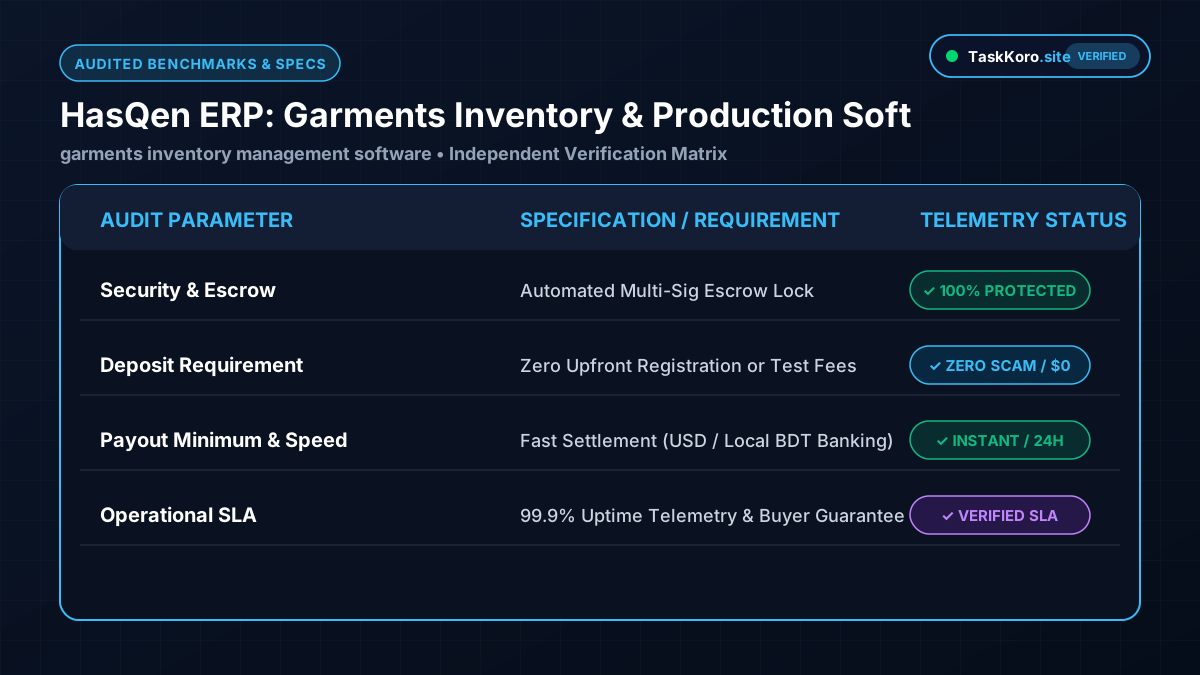
9. Advanced Reporting, Costing Analytics, and Business Intelligence Dashboards
In the high-stakes world of garment manufacturing and apparel retail, fragmented spreadsheets and retrospective financial reports are recipes for margin erosion. HasQen ERP addresses this by embedding robust business intelligence (BI) and multidimensional reporting engines directly into the core workflow. This section explores how advanced reporting, pre-costing versus post-costing analytics, and real-time dashboard configurations empower executives to transition from reactive firefighting to predictive operational governance.
9.1 Granular Costing Analytics: Pre-Costing vs. Post-Costing
Apparel profitability is determined long before a garment hits the sales floor or export container; it is won or lost at the BOM (Bill of Materials) and tech pack stage. HasQen ERP delivers a sophisticated costing module that automatically reconciles pre-costing estimates with post-costing realities:
- Pre-Costing Precision: During product development, the system aggregates anticipated material costs (fabric, trims, thread, labels), direct labor inputs (Standard Allowed Minutes multiplied by sewing rates), wash/dye treatments, and overhead allocations.
- Post-Costing Reconciliation: Once a production run is finalized, HasQen pulls actual consumption data from the shop floor—factoring in cutting-room waste percentages, actual fabric rolls consumed versus estimated markers, and overtime labor variances.
- Variance Analysis: The system highlights discrepancies immediately. If a style exhibits a negative variance greater than preset tolerances (e.g., actual material usage exceeded estimates by 4%), automated flags are dispatched to the merchandising and production heads to isolate root causes, such as supplier short-rolls or excessive cutting waste.
9.2 Executive BI Dashboards and Role-Based Visibility
Data overload is as dangerous as data scarcity. HasQen ERP solves this through role-based executive dashboards that serve up actionable KPIs tailored to specific organizational stakeholders:
- For Chief Executive Officers (CEOs): High-level financial overviews, rolling 12-month revenue forecasts, EBITDA margins by product line, and global inventory turnover ratios.
- For Production Directors: Floor-level throughput metrics, Line Efficiency (OEE - Overall Equipment Effectiveness), Work-In-Progress (WIP) bottlenecks, and worker absenteeism rates.
- For Merchandising & Sourcing Leads: Purchase order fulfillment trackers, supplier lead-time scorecards, sample approval timelines, and fabric stock-out warnings.
9.3 Troubleshooting Common Reporting Bottlenecks
Even the most advanced ERP systems can suffer from "garbage in, garbage out" syndromes. Organizations adopting HasQen ERP should anticipate and mitigate these common data hurdles:
- Symptom: Discrepancies between inventory valuation and financial general ledger.
Cause: Delayed entry of Goods Receipt Notes (GRNs) or unapproved manual adjustments made outside the system.
Resolution: Enforce strict user permission hierarchies within HasQen, locking inventory adjustments behind supervisory sign-offs and running automated nightly reconciliation scripts. - Symptom: Slow report generation times during peak end-of-month cycles.
Cause: Unindexed custom query parameters or massive unarchived historical transaction tables.
Resolution: Utilize HasQen’s built-in data archiving utility to move closed production seasons to historical read-only partitions, optimizing active database indexing.
10. Implementation Roadmap, Data Migration Strategies, and Enterprise Security Protocols
The failure rate of ERP implementations across the manufacturing sector is historically sobering, often driven by inadequate change management, sloppy data migration, or poor system integration. Deploying HasQen ERP requires a structured, phase-gate methodology designed to minimize operational downtime while maximizing user adoption across factory floors and corporate offices.
10.1 The Four-Phase Implementation Roadmap
HasQen’s deployment methodology follows a disciplined path from initial discovery to post-go-live optimization:
- Phase 1: Discovery, Blueprinting, and Gap Analysis (Weeks 1–4): Implementation consultants map existing workflows—from pattern making to final dispatch—against HasQen’s baseline modules. Customization requirements are documented, and a definitive project charter is signed off by executive sponsors.
- Phase 2: Configuration, Master Data Cleansing, and Integration (Weeks 5–10): The ERP environment is configured with company-specific charts of accounts, size matrices, color palettes, and workflow routing rules. Legacy data is cleansed and structured for migration.
- Phase 3: User Training, Parallel Runs, and Stress Testing (Weeks 11–14): Role-specific training modules are delivered to floor supervisors, merchandisers, and finance teams. System performance is stress-tested under simulated peak-load conditions, and a 14-day parallel run is executed alongside legacy systems.
- Phase 4: Go-Live and Continuous Optimization (Week 15+): The legacy system is retired (or placed in read-only archive mode), HasQen ERP becomes the single source of truth, and dedicated support teams provide hyper-care on the shop floor.
10.2 Data Migration Strategies for Legacy Systems
Migrating years of messy Excel sheets, legacy databases, and disparate software into a unified apparel ERP is a delicate operation. HasQen utilizes a staged ETL (Extract, Transform, Load) protocol:
- Master Data Prioritization: Migration begins with immutable baseline data: item masters, style libraries, BOMs, size/color matrices, supplier directories, and customer databases.
- Transactional Open Balances: Active purchase orders, unfulfilled sales orders, work-in-progress production lots, and current inventory stock levels by warehouse bin are migrated via validated staging templates.
- Historical Data Cutoff: Financial histories older than two active fiscal years are typically summarized into opening journal entries rather than transactional line items, keeping the active database lean and responsive.
10.3 Enterprise Security, Role-Based Access, and Compliance
Garment manufacturers handle sensitive intellectual property, including proprietary tech packs, designer sketches, cost sheets, and key buyer contracts. HasQen ERP enforces rigorous multi-layered security:
- Role-Based Access Control (RBAC): Users only view modules and data fields necessary for their job function. For instance, sewing floor operators cannot view financial margins or supplier pricing contracts.
- Data Encryption & Hosting: Data is encrypted both in transit (using TLS 1.3 protocols) and at rest (AES-256 bit encryption), whether deployed on secure cloud infrastructure or on-premise enterprise servers.
- Audit Trails: Every transaction, inventory adjustment, and price modification logs a permanent audit trail capturing user IDs, timestamps, IP addresses, and before-and-after value changes, ensuring strict compliance with international manufacturing and labor standards.
11. Cost-Benefit Analysis and ROI Calculation for Growing Apparel Businesses
Investing in enterprise software is a major capital expenditure. For growing apparel brands, manufacturers, and export houses, evaluating HasQen ERP requires looking past upfront licensing costs to calculate the long-term Return on Investment (ROI) driven by operational efficiencies, waste reduction, and increased top-line capacity.
11.1 Quantifiable Cost Reductions
HasQen ERP directly attacks the hidden profit leaks that plague traditional garment operations:
- Fabric and Material Savings (3%–7% reduction): By enforcing precise computerized marker planning, tighter inventory controls, and automated BOM calculations, companies drastically reduce dead stock and fabric cutting waste.
- Labor Productivity Gains (10%–18% increase): Real-time tracking of line efficiency and piece-rate validation eliminates bottlenecks, reduces idle time, and ensures accurate payroll disbursement without manual audits.
- Reduction in Chargebacks and Air-Freight Penalties (up to 40%): Improved production scheduling and real-time WIP visibility ensure on-time in-full (OTIF) deliveries to major global retailers, slashing costly air-freight penalties for delayed shipments.
11.2 The ROI Formula for Apparel Enterprises
To determine the financial viability of HasQen ERP, apparel executives can apply the standard enterprise software ROI formula:
Where Total Cost of Ownership (TCO) includes software licensing, implementation consulting, cloud hosting, and internal change management hours over a 3-year period.
For a mid-sized garment exporter turning over $10 million annually, a conservative 4% reduction in material waste yields $400,000 in annual savings. Combined with administrative labor savings and reduced audit cycles, most HasQen ERP implementations achieve full payback within 9 to 14 months post-go-live.
12. Future Trends in Apparel Tech and Final Recommendations for Selecting HasqenERP
The global apparel and textile manufacturing sector is undergoing a profound digital transformation. Driven by fast-changing consumer demands, sustainability mandates, and global supply chain volatility, the software powering your factory floor must be future-proof. This final section examines emerging tech trends in apparel manufacturing and delivers our definitive recommendation for deploying HasQen ERP.
12.1 Emerging Trends in Garment Tech
- Industry 4.0 & IoT Integration: The integration of IoT-enabled sewing machines, automated fabric spreaders, and RFID garment tracking tags into the central ERP spine.
- Sustainability and Traceability Compliance: Rising regulatory pressures (such as EU Digital Product Passports) require end-to-end traceability of fiber sourcing, water usage, and carbon footprints—capabilities increasingly baked into modern apparel systems.
- AI-Driven Demand Forecasting: Machine learning algorithms predicting consumer color and style trends to auto-adjust pre-season material procurement schedules.
12.2 Final Verdict and Strategic Recommendation
Managing a garment business using disconnected spreadsheets, manual cutting sheets, and isolated accounting software is no longer viable in a competitive global market. HasQen ERP bridges the critical gap between shop-floor realities and executive financial governance. With its specialized apparel feature set—spanning robust BOM management, dynamic size/color matrix handling, real-time line balancing, and precise pre-vs-post costing analytics—it stands out as an exceptional solution for growing apparel manufacturers, buying houses, and fashion retailers.
If your enterprise is experiencing inventory discrepancies, delayed export shipments, or blind spots in production efficiency, transitioning to HasQen ERP is a strategic imperative that delivers rapid payback and long-term competitive advantage.
Ready to Transform Your Garment Operations?
Stop letting material waste and fragmented spreadsheets eat into your profit margins. Discover how HasQen ERP can revolutionize your inventory, production, and costing workflows today.
Schedule Your HasQen ERP Demo Now →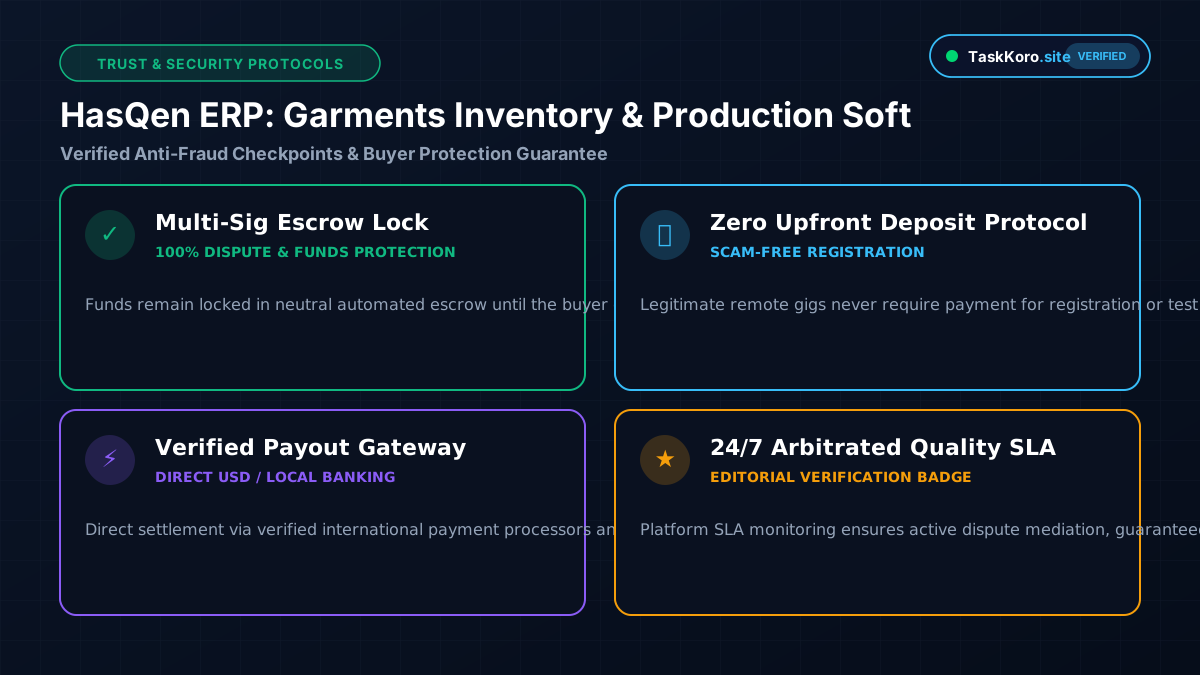
HasQen ERP Core Module Specifications & Operational Scope
Features and deployment capabilities may vary depending on the specific apparel manufacturing tier and customized integration packages selected.| Module Name | Primary Function | Key Features | Target User Role | Integration Level |
|---|---|---|---|---|
| Inventory Management | Raw material and finished goods tracking | Lot tracking, barcode scanning, stock level alerts | Warehouse Manager | High (Production & Procurement) |
| Production Planning | Scheduling cutting, sewing, and finishing floors | Line balancing, capacity planning, bottleneck analysis | Production Planner | High (Inventory & Sales) |
| Supply Chain & Sourcing | Vendor management and purchase order tracking | Automated reordering, supplier performance metrics | Procurement Officer | Medium (Finance & Inventory) |
| Quality Control (QC) | Defect tracking and compliance auditing | AQL inspection standards, rework logging, QA reports | Quality Inspector | Medium (Production) |
| Financial Accounting | Garments costing, payroll, and ledger management | BOM-based costing, multi-currency, expense tracking | Finance Manager | High (All Modules) |
HasQen ERP vs. Traditional Spreadsheet & Generic ERP Systems
Comparison based on typical small-to-medium enterprise (SME) garments manufacturing operational bottlenecks.| Feature / Capability | HasQen ERP (Garment Specific) | Traditional Spreadsheets (Excel) | Generic ERP Systems |
|---|---|---|---|
| BOM & Tech Pack Management | Integrated digital tech packs and multi-level BOMs | Manual, prone to broken formulas and version control issues | Requires heavy customization for apparel specs |
| Real-time Floor Tracking | Live RFID/Barcode integration for sewing lines | End-of-day manual entry sheets | Possible via expensive add-ons and IoT gateways |
| Garment Costing Accuracy | Automated calculation including CMT, trims, and wastage | Manual calculations with high human error risk | Standard costing, lacks apparel-specific wastage factors |
| Implementation Time | Weeks (Pre-configured for apparel workflows) | Immediate (but unsustainable for growth) | Months to years (requires extensive consulting) |
❓ Frequently Asked Questions
What is HasQen ERP and how is it specifically designed for the garments industry? +
HasQen ERP is a comprehensive enterprise resource planning software tailored specifically for apparel and garments manufacturers. Unlike generic ERP platforms, it comes pre-configured with industry-specific workflows such as Bill of Materials (BOM) management for multi-style garments, tech pack integration, size-color-matrix inventory handling, cutting-to-finishing floor tracking, and specialized apparel costing models that account for fabric wastage and CMT (Cut, Make, Trim) charges.
How does HasQen ERP handle inventory management for diverse fabrics and trims? +
HasQen ERP utilizes a sophisticated size-color-matrix and lot-tracking system to manage raw materials like fabrics, buttons, zippers, and threads, as well as finished goods. It tracks fabric rolls by dye-lot, shrinkage rate, and yardage, ensuring that production floors only pull matching lots to prevent shade variation issues in final garments. Automated reorder points help maintain optimal stock levels and prevent production halts.
Can HasQen ERP track real-time progress on the sewing and production floors? +
Yes. HasQen ERP integrates with barcode and RFID scanning terminals stationed across the manufacturing floor. Supervisors and managers can monitor real-time output at each stage—from CAD cutting and bundling to sewing lines, washing, quality inspection, and final packing. This live visibility helps identify bottlenecks instantly and keeps production schedules on track to meet strict buyer shipping deadlines.
Does HasQen ERP support accurate garment costing and pre-costing/post-costing analysis? +
Garment costing is one of HasQen ERP's strongest pillars. The software allows merchandisers to generate quick pre-costing estimates based on buyer tech packs, factoring in fabric consumption, consumption percentages, trim costs, embroidery/printing, washing, CMT, and overheads. Once production is complete, post-costing reports compare estimated expenses against actual consumption to reveal exact profit margins per style or order.
How does the software manage quality control (QC) and reduce defect rates in apparel manufacturing? +
HasQen ERP incorporates standardized Acceptable Quality Limit (AQL) inspection modules. Quality inspectors can record defects directly into the system at critical control points (e.g., inline, end-line, and final audits). The system flags high defect rates tied to specific sewing lines or workers, triggers automated rework tickets, and generates comprehensive quality audit reports for buyer compliance.
Is HasQen ERP suitable for small-to-medium enterprises (SMEs) as well as large apparel factories? +
Yes, HasQen ERP is architected to be modular and scalable. Small-to-medium apparel manufacturers can start with core modules like inventory, merchandising, and basic production tracking, and later scale up to advanced features like multi-factory planning, complex supply chain analytics, and automated payroll integration as their business expands.
What kind of reporting and analytics dashboard does HasQen ERP provide for management? +
HasQen ERP features an intuitive executive dashboard that delivers real-time visibility into key performance indicators (KPIs). Management can instantly access reports on order fulfillment rates, work-in-progress (WIP) status, fabric utilization efficiency, worker productivity, shipping schedules, and financial profitability. Custom report builders also allow export to PDF and Excel for stakeholder meetings.
How does the implementation and onboarding process work for HasQen ERP? +
The implementation process begins with a comprehensive workflow audit of your garment manufacturing operations. HasQen's implementation team assists with data migration (such as existing styles, BOMs, and supplier databases), configures user roles, and conducts thorough training sessions for merchandisers, floor supervisors, warehouse staff, and management. Ongoing technical support ensures smooth adoption and minimal disruption to ongoing production cycles.
Abdullah Hasib
Lead Technology & Editorial Director at TaskKoro.site
Auditing digital remote work platforms, microtask payout verification, and AI workflow security. Dedicated to protecting remote freelancers from fraudulent upfront fee scams.